SOUL Vankriti vs Conventional Farmhouses: What Makes It Different?
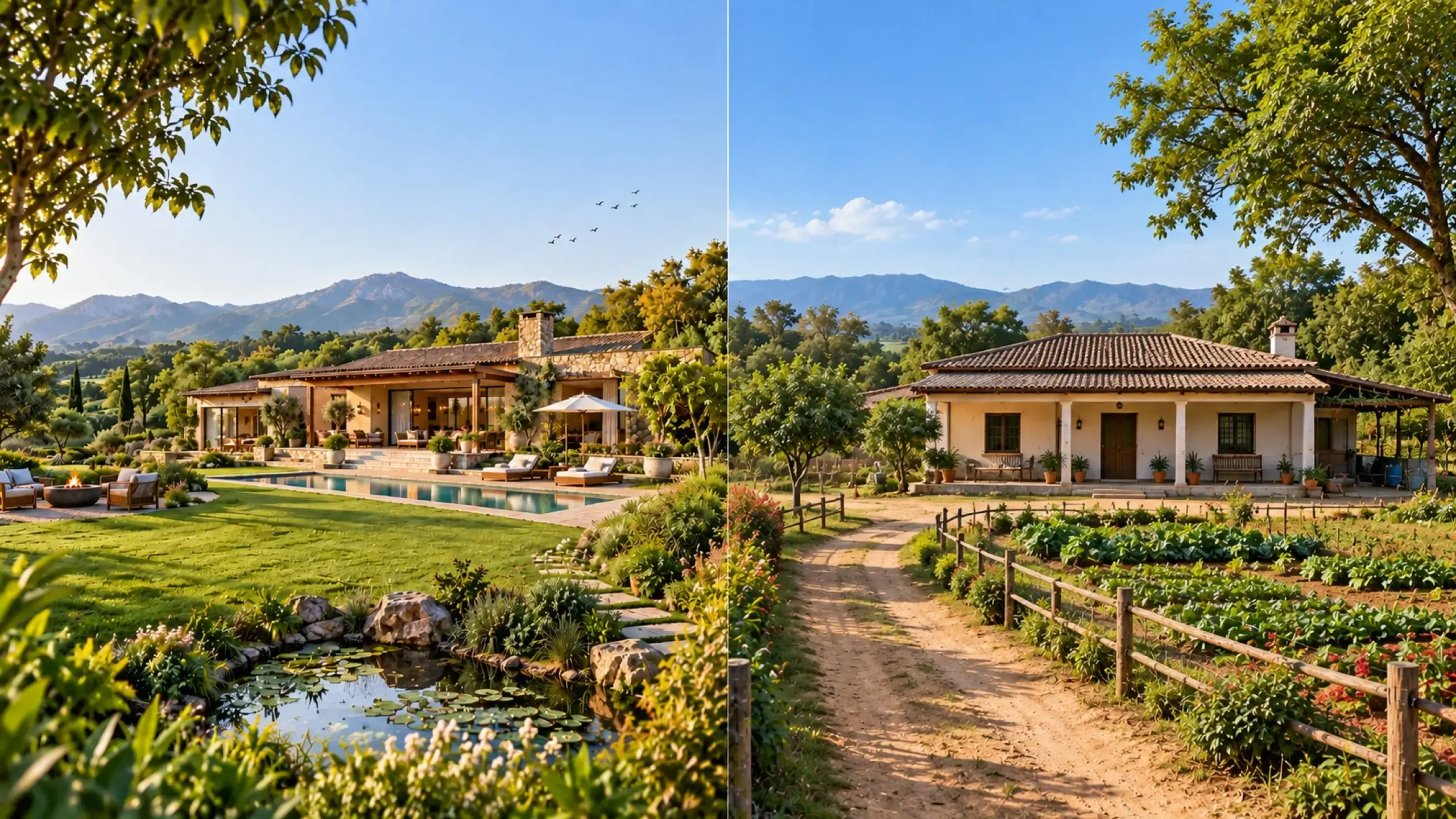
The main difference between SOUL Vankriti and a conventional farmhouse is the ownership model. A conventional farmhouse typically centres on an individual plot, structure and private amenities, while SOUL Vankriti is positioned as a planned farmhouse community combining private land and a villa with shared spaces, curated experiences and managed services.
Located in the Dausa-Lalsot region of Rajasthan, SOUL Vankriti is being positioned as a nature-led farmhouse development. The distinction, therefore, is less about owning a farmhouse and more about how the surrounding land, infrastructure, amenities and maintenance are planned.
What is a Conventional Farmhouse?
A conventional farmhouse does not follow one standard format. It may be an independently owned rural property, a farmhouse built on a larger private parcel or a property within a small development.
The ownership experience usually depends on the individual property and owner. Key factors include:
- Land size and location
- Construction and layout
- Landscaping and agricultural use
- Private amenities
- Road access and utilities
- Security and maintenance
- Land title and permitted land use
Community infrastructure and professional property management may be limited or vary significantly between properties.
SOUL Vankriti vs Conventional Farmhouses: Key Differences
The clearest difference is the planned environment around the private property.
| Factor | Conventional Farmhouse | SOUL Vankriti |
|---|---|---|
| Ownership Model | Primarily individual property ownership | Private land with villa within a planned community |
| Planning | Usually centred on the individual property | Master-planned farmhouse development |
| Landscape | Depends largely on the property | Nature-led landscaping and dedicated zones |
| Amenities | Mainly private or property-specific | Planned shared lifestyle experiences |
| Community | Limited or informal in many cases | Community spaces and curated experiences |
| Maintenance | Often managed by the owner | Managed services are part of the stated model |
| Recreation | Depends on the property | Planned wellness, sports, nature and family spaces |
| Connectivity | Depends on the property's location | Positioned along the Delhi-Mumbai Expressway corridor |
| Overall proposition | Land + farmhouse + privacy | Land + villa + planned environment + services |
These are broad differences between the two models rather than a universal definition of every conventional farmhouse.
1. Planned Community Instead of an Isolated Property
A conventional farmhouse is often planned around the individual plot and building. SOUL Vankriti takes a wider community-level approach.
The project information provided for Vankriti describes a large, low-density setting, with its first phase planned around private 1,000 sq. yd. land parcels and 900 sq. ft. 1 BHK villas. The broader plan is described as including multiple farmhouse units and dedicated lifestyle zones.
For buyers, the distinction is important because the ownership experience extends beyond the private farmhouse to the surrounding development.
2. Nature is Integrated Into the Master Plan
Open land is naturally associated with farmhouse living, but a planned farmhouse community can give the landscape a more defined role.
Vankriti's proposed zones are organised around themes such as:
- Wellness and tranquillity
- Sports and fitness
- Signature experiences
- Family and community
- Nature, ecology and landscape
The project also describes experiences including nature trails, botanical areas, cycling, yoga spaces, orchard walks and outdoor recreation.
This makes landscape planning part of the project's overall proposition rather than simply a by-product of a rural location.
3. Managed Farmhouse Living
A private farmhouse can require ongoing attention to landscaping, security, utilities, repairs and general upkeep. These responsibilities can become more significant when the property is used as a weekend or second home.
SOUL Agrofarms describes its managed farmhouse model as covering areas such as landscaping and horticulture, property and amenity maintenance, agro-support, utilities and security.
For buyers considering a managed farmhouse, the important point is to check exactly what is included. Maintenance charges, service scope, exclusions and contractual responsibilities should be confirmed in the applicable documents before purchase.
4. Private Property Plus Shared Experiences
A conventional farmhouse generally derives its lifestyle value from private land, open space and the farmhouse itself.
Vankriti adds planned common areas and shared experiences to that model. The project has more than 100 lifestyle amenities across five zones, covering areas such as sports, wellness, nature and community activities.
This creates two layers of ownership:
Private: land and villa
Shared: planned landscape, amenities and community spaces
The value of this model depends on how much importance a buyer places on shared infrastructure compared with complete independence.
5. Location and Connectivity
Location remains an important part of any farmhouse purchase because accessibility directly affects how frequently a second home can be used.
SOUL Vankriti is positioned at Dabar Khurd, Lalsot, in Dausa district, Rajasthan, along the Delhi-Mumbai Expressway corridor. The project information cites approximate distances of 9 km from Lalsot, 34 km from Dausa and 76 km from Jaipur.
Buyers should independently verify current road access, travel times, route conditions and the exact project location before making a purchase decision.
Who May Consider SOUL Vankriti?
SOUL Vankriti may be relevant to buyers looking for:
- A nature-oriented second home
- Private land within a planned development
- A managed farmhouse rather than a fully self-managed property
- Shared recreational and wellness spaces
- A weekend retreat connected to the Delhi-Mumbai Expressway corridor
The suitability of the project ultimately depends on the buyer's intended use, budget, preferred level of privacy and ownership structure.
Conclusion
The key difference in SOUL Vankriti vs Conventional Farmhouses is the model of ownership.
A conventional farmhouse generally focuses on private land, a standalone structure and individual maintenance. SOUL Vankriti is positioned as a planned farmhouse community that combines private land and a villa with shared amenities, nature-focused planning and managed services.
For buyers exploring a farmhouse in Rajasthan, the comparison should therefore go beyond plot size. Land title, permitted use, location, construction, maintenance obligations, amenities and the actual ownership structure are equally important.
Frequently Asked Questions:
Is SOUL Vankriti different from a conventional farmhouse?
Yes. SOUL Vankriti is a planned farmhouse community combining private land and villas with shared amenities, nature-focused zones and managed services. A conventional farmhouse is generally centred on an individual property.
Is a farmhouse community better than an individual farmhouse?
There is no universal answer. A farmhouse community may suit buyers who value organised amenities and managed maintenance, while an independent farmhouse may appeal to buyers who prefer greater control over the property. Ownership terms should be compared carefully.