Mudhouse vs Farmhouse in Haridwar: Which Is Better?
Haridwar has emerged as one of North India's preferred destinations for second homes, wellness retreats, and nature-inspired living. Buyers today are increasingly exploring alternatives to conventional homes, making the mudhouse vs farmhouse comparison more relevant than ever.
While both options offer peaceful surroundings and a connection with nature, they serve different lifestyles and investment goals. Whether you are a homebuyer seeking a weekend retreat, an investor looking for long-term appreciation, or a real estate professional advising clients, understanding these differences is essential.
This guide compares mudhouses and farmhouses in Haridwar based on construction, cost, maintenance, sustainability, investment potential, and suitability.
What is a Mudhouse?
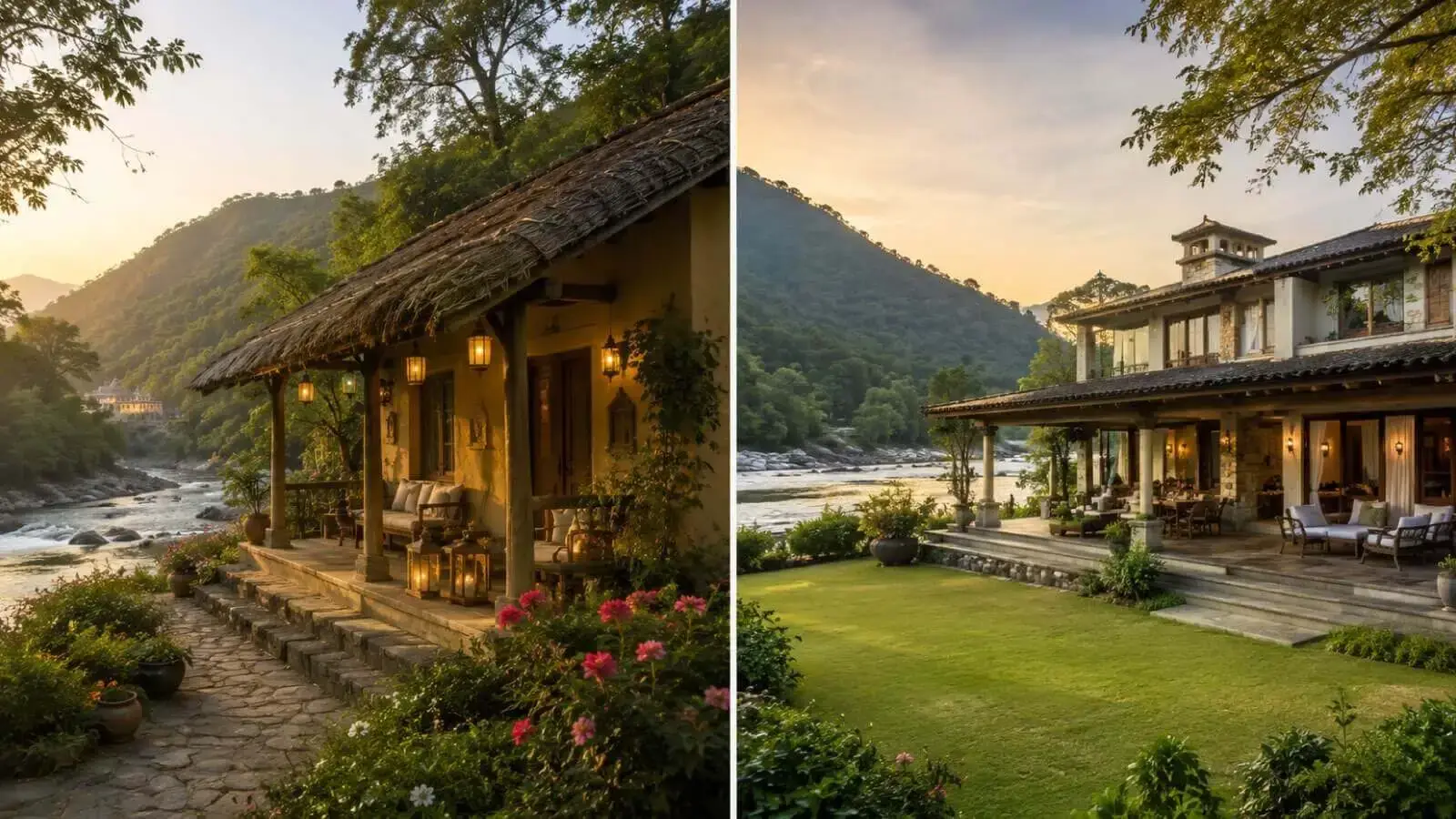
A mudhouse is a home primarily built using natural materials such as stabilized earth, clay, lime, bamboo, and locally available resources. Modern mudhouses combine traditional construction techniques with contemporary design to improve durability and comfort.
Key Benefits
- Naturally cool during summers and warm in winters
- Lower environmental impact
- Excellent thermal insulation
- Unique architectural appeal
- Suitable for wellness and eco-tourism projects
What is a Farmhouse?
A farmhouse is a residential property built on agricultural or approved land, usually featuring larger open spaces, gardens, orchards, or recreational areas. Modern farmhouses often include premium amenities while offering privacy away from city life.
Key Benefits
- Larger land ownership
- Better space for farming and gardening
- Ideal for family gatherings and vacations
- Strong demand for holiday rentals
- Suitable for long-term lifestyle investments
Mudhouse vs Farmhouse: Detailed Comparison
| Feature | Mudhouse | Farmhouse |
|---|---|---|
| Construction | Natural materials | Brick, concrete, steel or mixed construction |
| Sustainability | Very high | Moderate to high depending on design |
| Energy Efficiency | Excellent natural insulation | Depends on construction quality |
| Maintenance | Periodic natural upkeep | Regular structural maintenance |
| Land Requirement | Flexible | Usually requires larger plots |
| Lifestyle | Eco-friendly and minimalist | Spacious and luxury-oriented |
| Investment Purpose | Wellness stays and eco-tourism | Second homes, rentals, family use |
| Initial Cost | Varies by design and materials | Generally higher because of larger land and construction |
Which Property is Better?
Choose a Mudhouse if you:
- Prefer sustainable living
- Want lower environmental impact
- Appreciate natural architecture
- Plan an eco-retreat or wellness home
- Value energy-efficient construction
Choose a Farmhouse if you:
- Need larger outdoor spaces
- Want a family vacation home
- Plan farming or gardening
- Expect long-term capital appreciation
- Require flexibility for future expansion
Investment Potential in Haridwar
Haridwar benefits from year-round religious tourism, improving road connectivity, and growing interest in wellness tourism. These factors continue to increase demand for nature-focused residential developments.
A mudhouse in Haridwar appeals to buyers interested in eco-friendly lifestyles and experiential tourism, while a farmhouse in Haridwar attracts families, retirees, and investors seeking spacious weekend homes or rental opportunities.
Before purchasing any property, buyers should verify:
- RERA registration (where applicable)
- Land ownership documents
- Approved land use
- Local development regulations
- Required approvals from competent authorities
Sustainability Comparison
One of the biggest differences in the mudhouse vs farmhouse debate is environmental performance.
Mudhouses typically consume fewer manufactured materials and provide natural temperature regulation, reducing dependence on air conditioning.
Farmhouses can also become environmentally responsible through rainwater harvesting, solar energy systems, efficient landscaping, and sustainable construction practices.
Why Choose SOUL Agrofarms?
If you're looking for thoughtfully planned nature-inspired properties, SOUL Agrofarms offers opportunities designed around sustainable living in Haridwar. Buyers can also explore SOUL Prakriti, which focuses on blending natural surroundings with modern comfort.
Whether you're considering a mudhouse in Haridwar or a farmhouse in Haridwar, choosing a developer that emphasizes legal transparency, quality planning, and responsible development can make a significant difference.
Conclusion
There is no universal winner in the mudhouse vs farmhouse comparison. The right choice depends on your objectives.
A mudhouse is ideal for environmentally conscious buyers seeking natural, energy-efficient living. A farmhouse offers larger spaces, flexibility, and long-term lifestyle value for families and investors.
Before investing, evaluate your budget, intended use, legal compliance, maintenance requirements, and future plans. With Haridwar's growing appeal as a destination for wellness, second homes, and nature-based living, both options present promising opportunities when selected carefully.
Frequently Asked Questions
Is a mudhouse suitable for permanent living?
Yes. Modern mudhouses can provide comfortable year-round living when designed with appropriate engineering, waterproofing, and maintenance.
Which is more affordable: a mudhouse or a farmhouse?
The cost depends on land, design, construction materials, and amenities. Farmhouses generally involve higher investment because they often include larger plots and more extensive construction.
Are farmhouses good investments in Haridwar?
Farmhouses can offer long-term lifestyle and investment value, particularly in locations with strong connectivity and growing demand for second homes.
Do mudhouses require more maintenance?
Mudhouses may require periodic maintenance depending on construction techniques and local climate, but modern stabilization methods can improve durability.
What should buyers verify before purchasing?
Check land title, approvals, applicable RERA registration, land-use permissions, and all relevant legal documentation before completing a transaction.