Farmhouse vs Flat: Where Should You Invest in 2026?
Choosing between a farmhouse and a flat in 2026 is less about finding a universally better property and more about matching the asset to your intended use. A flat typically suits buyers who prioritise urban connectivity, convenience and conventional residential living. A farmhouse appeals more to those seeking private land, open space, a second home and a nature-oriented lifestyle.
India’s residential market remains active, with CBRE reporting stable end-user demand and continued interest in high-end and luxury housing. Its 2026 outlook also points to stronger demand for larger homes and professionally managed residential formats.
For buyers comparing farmhouses vs flats, the decision should therefore go beyond the purchase price. Location, legal status, maintenance, liquidity, intended use and long-term ownership priorities all matter.
Farmhouse vs Flat: What is the Difference?
The fundamental difference lies in the ownership experience.
A flat provides an apartment within a larger residential development, along with applicable rights in common areas and land. A farmhouse places greater emphasis on the individual land parcel, outdoor space and a lower-density environment.
| Factor | Farmhouse | Flat |
|---|---|---|
| Primary appeal | Land, privacy and open space | Urban convenience |
| Typical setting | Nature-oriented or peripheral locations | Urban or suburban areas |
| Outdoor space | Usually more significant | Generally limited to private/common areas |
| Privacy | Typically higher | Community-oriented |
| Maintenance | May include land and landscaping | Common areas generally managed collectively |
| Daily convenience | Depends heavily on location | Usually stronger in established urban areas |
| Best suited for | Second homes, retreats and nature-led living | Primary homes and conventional urban living |
| Due diligence | Land title, land use and development permissions are particularly important | Title, project approvals and applicable RERA requirements are key |
Neither property type automatically offers better financial performance. The investment case depends on the specific property, location, purchase price and local demand.
Farmhouse or Flat: Which One Should You Choose in 2026?
The most practical starting point is your purpose.
A farmhouse may suit you if you prioritise:
- Private land and greater openness
- A second or weekend home
- Privacy and lower-density surroundings
- Outdoor living and landscaping
- A closer connection with nature
- A lifestyle asset for family and personal use
A flat may suit you if you prioritise:
- Proximity to offices and employment hubs
- Schools, hospitals and retail
- Everyday urban convenience
- Established residential infrastructure
- Conventional apartment living
- A primary residence in or around the city
A farmhouse is therefore not simply a larger version of a flat. It represents a different combination of land ownership, lifestyle and responsibility.
Why Consider a Farmhouse in 2026?
The broader residential market continues to show demand for higher-end housing. CBRE’s 2026 outlook notes increasing demand for high-end homes in major cities, supported by larger-home preferences, rising household incomes and interest from HNIs and NRIs.
That trend does not mean farmhouses will outperform apartments. The two property formats serve different buyer segments.
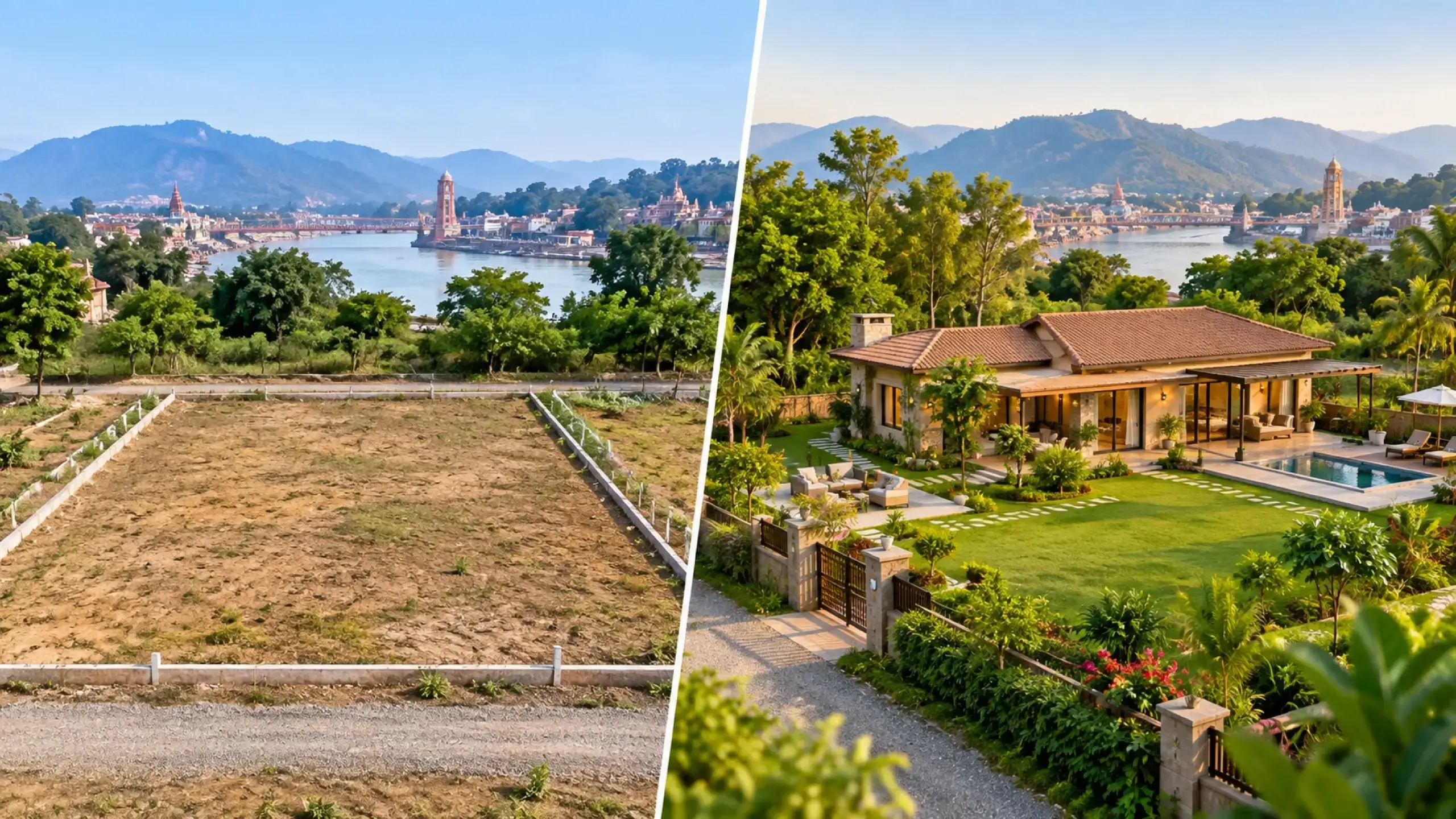
The appeal of a farmhouse comes from combining built space with land and outdoor living. For a second-home buyer, that can create a property that serves both as a private retreat and a long-term lifestyle asset.
A professionally managed development can add another layer of convenience. Landscaping, security, amenities and property management can reduce some of the operational responsibilities normally associated with maintaining a standalone farmhouse.
Farmhouse vs Flat: Key Investment Factors
1. Location and Connectivity
Location matters differently for each property type.
For a flat, proximity to employment centres, schools, healthcare, public transport and retail can directly influence everyday usability. For a farmhouse, buyers may accept greater distance from urban centres in exchange for space, privacy and a quieter environment.
The right location should therefore balance connectivity with the quality of the surrounding environment.
For buyers considering a farmhouse, road access, proximity to major cities, nearby infrastructure and the character of the surrounding landscape deserve particular attention.
2. Land Ownership
Land is one of the clearest distinctions between a farmhouse and an apartment.
Because the land component is more central to farmhouse ownership, buyers should examine title records, land-use classification, revenue records and development permissions carefully.
A property marketed as a “farmhouse plot” should not automatically be assumed to carry residential construction rights. The permitted use must be independently verified.
3. Legal Due Diligence
Farmhouse transactions can involve land-related regulations that differ from conventional apartment purchases.
Rajasthan’s Revenue Department maintains rules and procedures concerning the conversion of agricultural land for non-agricultural purposes. Buyers considering a farmhouse in the state should verify:
- Land ownership and title
- Revenue records
- Land-use classification
- Applicable conversion permissions
- Approved layouts and development permissions
- Encumbrances or litigation
- Access rights
- Construction permissions
- Utility arrangements
- RERA registration or exemption, where applicable
For plotted developments, Rajasthan RERA regulations require relevant project information, including approved site plans and revenue details, to be displayed subject to the applicable regulatory framework.
Because requirements can vary according to location, land classification and development structure, independent legal verification remains essential.
4. Maintenance and Management
The freedom of farmhouse ownership can also bring greater responsibility.
Landscaping, horticulture, security, utilities, structural upkeep and common facilities may all require ongoing management. This makes the operating model an important part of the purchase decision.
A managed farmhouse development can address some of these responsibilities through organised maintenance and property management. SOUL Agrofarms describes its managed model as covering landscaping and horticulture, structure and amenity maintenance, agro-support, utilities, security and community management.
For buyers who want the space and privacy associated with a farmhouse without managing every operational detail themselves, this distinction can be significant.
Farmhouse vs Flat: What About Resale and Returns?
Returns should never be assumed simply from the property category.
A flat in an established urban market may appeal to a broader pool of conventional residential buyers. A farmhouse can attract a more specific audience looking for land, privacy, recreation or second-home use.
Before investing, compare:
- Purchase price
- Total acquisition costs
- Location and connectivity
- Existing demand
- Comparable transactions
- Maintenance expenses
- Rental potential, where relevant
- Likely resale audience
- Holding period
- Legal and development status
Advertised appreciation or rental-yield projections should not be treated as guaranteed outcomes. CBRE’s broader residential data can indicate market trends, but it cannot establish the expected return of an individual farmhouse or flat.
Who Should Consider a Farmhouse in Rajasthan?
A farmhouse can be relevant to buyers who want more than a conventional urban residence.
It may suit:
- Families looking for a weekend retreat
- Buyers seeking a second home
- Professionals wanting a nature-oriented escape
- Buyers who value private outdoor space
- Long-term owners interested in land-based residential assets
- Buyers seeking a managed farmhouse community rather than an isolated property
For regular family use, however, lifestyle appeal is only one consideration. Accessibility, amenities, utilities and property management can be equally important.
What Should You Check Before Buying a Farmhouse?
Use the following checklist before committing to a purchase.
Legal
- Verify title and ownership.
- Check land-use status.
- Confirm applicable permissions and approvals.
- Review encumbrances and litigation.
- Verify RERA registration or applicable exemption.
Physical
- Inspect road access.
- Check electricity and water arrangements.
- Assess construction quality.
- Examine drainage and site conditions.
- Understand landscaping and maintenance responsibilities.
Financial
- Calculate the complete acquisition cost.
- Include registration, taxes and applicable charges.
- Estimate recurring maintenance expenses.
- Assess potential rental income conservatively.
- Compare the property with similar local assets.
Lifestyle
- Check actual travel time rather than relying only on stated distances.
- Visit the property at different times, if possible.
- Understand the surrounding development.
- Assess privacy, greenery and usable open space.
- Confirm which management services are actually included.
Farmhouse vs Flat: A Practical Decision Guide
The choice becomes clearer when the property is evaluated against its intended use.
If your priority is urban living, connectivity and everyday convenience, a flat may align more naturally with your requirements.
If you value land, privacy, open space and a second-home lifestyle, a farmhouse offers a different ownership proposition.
For buyers seeking nature-centric living with professional management, planned farmhouse developments may be worth considering alongside standalone properties. The comparison should still be based on legal status, development quality, maintenance structure and total ownership cost.
In Rajasthan, projects such as SOUL Vankriti represent this managed, nature-oriented approach to farmhouse ownership, combining private space with a broader community and infrastructure proposition. As with any property purchase, the project should be assessed independently on its legal, financial and development fundamentals.
Conclusion
The farmhouse vs flat decision ultimately comes down to purpose.
A flat is primarily an urban residential asset built around connectivity, convenience and community living. A farmhouse places greater emphasis on land, privacy, outdoor space and a nature-led lifestyle.
For buyers seeking a second home or a more expansive outdoor environment, a well-planned farmhouse can offer an ownership experience that an apartment cannot replicate. But lifestyle appeal should not replace due diligence.
Before investing, assess the location, title, land use, approvals, development quality, maintenance costs, total acquisition cost and potential resale audience.
In 2026, the more useful question is not simply which property type is better. It is which format aligns with your intended use, investment horizon and ownership priorities?
Frequently Asked Questions
Is a farmhouse better than a flat in 2026?
Neither property type is universally better. A flat generally suits urban residential needs, while a farmhouse is more relevant to buyers prioritising land, privacy, open space and second-home living.
What is the main difference between a farmhouse and an apartment?
The main difference is the ownership proposition. An apartment primarily provides residential space within a larger development, while a farmhouse typically places greater emphasis on the land parcel and outdoor environment.
Farmhouse vs apartment: Which requires more due diligence?
Both require thorough due diligence. Farmhouse purchases, however, can require additional attention to land title, land-use classification, conversion permissions and development rights because the land component is more central to the property.